Viernes 14 de Mayo 1993, 19ª y antepenúltima etapa de la Vuelta ciclista a España 1993
 |
| Perfil hemeroteca www.elmundodeportivo.com |
Era la última oportunidad para los Amaya si aún querían aspirar al menos al segundo puesto con Cubino,la última oportunidad de victoria de etapa para Delgado, quizás más libre al no ser peligroso en la general ( ocupaba el sexto lugar a más de 7 minutos de Rominger), o quien sabe, a lo mejor Manolo Saiz tenía guardado un as en la manga y Zulle tenía previsto atacar en la etapa.
El que parecía claro que tendría que intentar algo en el naranco era Rominger, 33" sobre Zulle con 44 kilómetros de contrarreloj por delante se antojaban escasos...
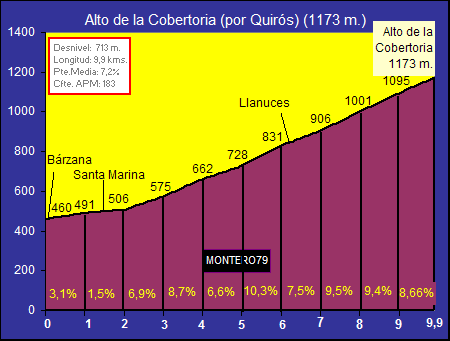
Y se iban a subir los siguientes puertos
 |
| Altimetría M. Montero http://www.39x28altimetrias.com |
 |
| Perfil J.L.Soutelo Rozas http://gcensidesa.es |
Y pasando Oviedo el alto del Naranco donde el genial e imprevisible escalador asturiano José Manuel Fuente había cimentado su victoria de la Vuelta 1974
 |
| http://www.lavueltaasturias.com |
Sin embargo parecía que todos tenían sus miras puestas en la contrarreloj de Santiago del Domingo,a la ONCE le valía la desventaja y Juan Fernández apostaba ciegamente por su pupilo, que a su vez decía que quería ganar la etapa del Naranco ante su gente pero que iba a ser complicado aumentar la ventaja sobre Zulle ... palabras y más palabras, pero los campeones lo son porque escriben páginas de leyenda allá por donde ruedan...
Fue una etapa dura y sin imágenes de televisión en el ascenso de la Cobertoria donde ya el fuerte ritmo hacía que se seleccionara el pelotón.
Curiosamente y tras una mala vuelta, el primero en coronar era el ídolo español Pedro Delgado , pero en el descenso el segoviano no iba a arriesgar, como por otra parte hacían la dupla del CLAS Rominger y Gastón, Rominger se lanzaba a tumba abierta y el bueno de Gastón se la jugaba a pesar de tener muy fresco su abandono en el Tour del año anterior tras caerse en el descenso del Roselend.
Sin embargo el momento clave de la vuelta estaba por llegar. Zulle que veía como la dupla del CLAS se marchaba decidía adelantar posiciones en el grupo, pero cuando se lanzaba a por los CLAS y en una curva a izquierdas ocurría lo temido en un día de lluvia y con un descenso tan peligroso, el líder de la ONCE se caía ...
No tardaba demasiado en levantarse pero la carrera ya estaba rota, se acababa el descenso pasados unos kilómetros la dupla del CLAS estaba por delante con mas de medio minuto sobre un grupo con los Amaya y Delgado y más atrás a un minuto Zulle en un grupo con Bruynell y Breukink, junto a a Miguel ángel Martínez que había esperado a Zulle tras su caida...
Gastón se desfondaba por su líder, quería dejarlo a pie del Padrún con la máxima diferencia posible, despues todo sería subir y bajar y Rominger haría el resto
Por detrás un Breukink irreconocible tiraba haciendo de gregario de lujo
 |
| http://narraciondeportiva.blogspot.com.es |
Coronaba Rominger el Padrún con la ONCE tirando por detrás y el Amaya expectante, de forma inmediata se iniciaba el ascenso a la Manzaneda y Zulle decidía que ya era él el que debía responder en primera persona. La etapa se convertía en un mano a mano histórico en la Vuelta, los suizos estaban protagonizando una de las jornadas más bellas de ciclismo de siempre y todavía quedaban 20 kilómetros para meta.
El líder tiraba con todo, le iba la vuelta en ello, su segunda vuelta, para igualar el record de la ronda
 |
| https://picasaweb.google.com |
Rominger perdía algo de diferencia y pasaba con 45" por la cima sobre el grupo de Zulle que era comandado por Cubino y se lanzaba hacia Oviedo. Los aficionados asturianos que se agolpaban en las rampas del Naranco no daban crédito a lo que estaban viendo, una exhibición a lo Fuente, y de un suizo asturiano...
Por detrás Zulle seguía tirando sin colaboración alguna, Cubino se limitaba seguir su rueda y Rincón, Montoya o Delgado mucho hacían con aguantar.
La ventaja se había estabilizado en los 45", Zulle dejaba claro que era un digno segundo y que de no ser por la caída podría haber estado cerca de un Rominger que se veía ganador de la etapa y de la Vuelta y entregaba sus últimas fuerzas ante una afición enfervorecida
 |
| http://rynoventoux.blogspot.com.es |
Y finalmente ganaba la etapa Rominger, 3h 59' 41". Los segundos iban cayendo y Cubino ahora sí atacaba a Zulle en los últimos metros entrando segundo a 35", Zulle lo hacía a 44" con Montoya y Rincón, Delgado a 53"
Por detrás un reguero de corredores en el que el 12º en la etapa Arsenio González cedía 4'31", había sido un día grande.
La clasificación general quedaba sentenciada, o al menos eso parecía
1º.Rominger.......83h46'38"
2º.Zulle.................a 1'17"
3º.Cubino.............a 4'15"
4º.Rincón..............a 5'49"
5º.Montoya..........a 6'34"
6º.Delgado...........a 8'21"
Un Zulle exhausto comparecía en el set de televisión española para comentar su caída y su todavía imperfecto español hacía que salieran de su boca términos que pasarían a la memoria ciclista
" Culo suelo, duele, bici floges..." grande el suizo...
La penúltima etapa era ganada al esprint por el corredor de la Lampre Abdoujaparov y todos guaradaban velas para la última etapa, que en principio no debía ser decisiva más que para el ganador de la contrarreloj, con Breukink, Zulle, Rominger y Mauri como favoritos. Una dura contrarreloj de casi 45 kilómetros ...
 |
| hemerotecaelmundodeportivo.com |
La suerte parecía echada, pero el pupilo de Manolo Saíz no había dicho su última palabra.
Mientras parecían buenos los tiempos de Jalabert con 1h07'59" o posteriormente el de Luca Gelfi con 1h 06'10" por detrás ya habían salido los primeros de la general y Zulle iba a hacer temblar los cimientos de la Vuelta ...
Y desde las primeras referencias se veía que la victoria de etapa iba a estar entre los dos suizos, pero con ventaja para Zulle, que era capaz de aventajar a Rominger en 20" cuando quedaban todavía 25 kilómetros para el final, el 1'17" pasaba a 57" y todo era posible.
Rominger no iba cómodo y a pesar de estar realizando una buena contrarreloj no podía acercarse a su joven compatriota. Juan Fernández no paraba de animar a Rominger, la Vuelta iba a jugarse hasta el último metro.
Zulle por el contrario quitaba las pegatinas a Cubino que nada podía hacer ante el ciclón suizo. Más referencias y mayor ventaja. Zulle sacaba ahora casi 40" a 20 de meta. Esto no era ya un problema era una amenaza de perder la vuelta, y mientras los directores enloquecían en sus respectivos coches de equipo.
ONCE y CLAS, CLAS y ONCE. SAIZ y FERNÁNDEZ.
Sin embargo Zulle perdía un poco de fuelle en los siguientes kilómetros y Rominger conseguía controlar la desventaja, en el parcial del km 30 la diferencia se mantenía, 38".
A 14 kilómetros de meta por fin parecía que Rominger ganaría la Vuelta, pero mejor no cantar victoria ante la posibilidad de cualquier problema ...
Iban llegando los mejores, y Breukink marcaba el mejor tiempo con
1h03'28", Delgado marcaba el segundo mejor tiempo en el que era sin duda
su mejor día en la Vuelta, con 1h04'43".Mientras Rincón y Montoya cumplían.
Se presentaba finalmente Zulle con un tiempo de 1h00'59" en la meta de Santiago de Compostela
Estratosférico
Había sacado a 3'29" a un especialista como Breukink , que además estaba acabando la Vuelta muy fuerte, y 4'44" a Delgado, gran crono del segoviano.
Casi 44 km/h en un duro día. Quedaba por llegar Rominger, la duda era a cuanto se iba a quedar Zulle de ganar la Vuelta ... a 29" ...
Rominger hacía el segundo mejor tiempo en la etapa con 1h01'47" y se proclamaba vencedor.
La clasificación quedaba así en sus primeras posiciones:
1º Rominger (CLAS) .........96h 07´03"
2º Zülle (ONCE)............a 29"
3º Cubino (Amaya) ...........a 8´54"
4º Rincón (Amaya)...........a 9´25"
5º Montoya (Amaya)............a 10´27"
6º Delgado (Banesto)...........a 11´17"
Sólo Delgado conseguía infiltrase entre los AMAYA, CLAS y ONCE que acaparaban las primeras 12 posiciones.
29" habían decidio la vuelta, el día del Naranco había sido clave, la Cobertoria pasaría también a la historia de la Vuelta.
Al acabar la contrarreloj un agotado Rominger comentaba que había tenido un mal día:
“Unos problemas estomacales que sufrí anoche me causaron muchos problemas durante la contrarreloj .Zülle estuvo fenomenal y yo tuve que vaciarme para no perderla Vuelta .Fue el día más duro de mi vida ciclista”.
Un día sin duda muy feliz para el suizo , que posaba con su hija en el podium
 |
| Plataforma Recorridos Ciclistas |
Había sido su segunda grande, y al igual que el año anterior la había tenido que luchar, aunque éste año qizá al límite de sus posibilidades, ante un corredor como Zulle que se postulaba como un nuevo vueltómano en el panorama internacional, ya que subía y cronometraba bien. Sólo le faltaba a Zulle enfrentarse a etapas kilométricas con grandes puertos para probarse que estaba hecho para las vueltas de tres semanas como Giro o Tour.
Por su pare Rominger, se iba a enfrentar a Indurain en el Tour.
Un Indurain que ganaría su segundo Giro y haría su segundo doblete consecutivo.


